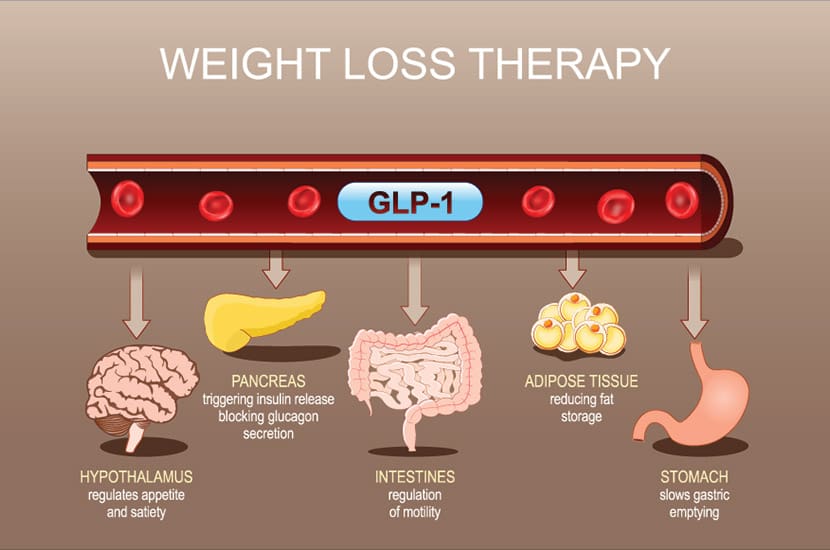
In fat cells , it promotes improved fat metabolism and reduces inflammation All mechanisms are supported by the 2025 narrative review in Biomedicines, which highlights GLP-1s multifaceted role in satiety, insulin regulation, glycogen production, and fat metabolism GLP1 Medications Are Gaining Popularity
10.1111/dom.13761 Summary Keywords anti-inflammatory, atherosclerosis, coronary artery disease, glucagon-like peptide-1, mechanisms Citation Skrobucha A, Pindlowski P, Krajewska N, Grabowski M and Jonik S (2024) Anti-inflammatory effects of glucagon-like peptide-1 (GLP-1) in coronary artery disease: a comprehensive review
The 26-week, international, open-label, phase III trial had 1,663 type 2 diabetic subjects that were insulin-nave and poorly controlled on Metformin with or without pioglitizone
The homeostatic feeding is mainly orchestrated in the arcuate nucleus of the hypothalamus (Arc) by different types of neuron populations: the co-expressing Agouti-related protein (AgRP) and neuropeptide Y (NPY) neurons and the co-expressing pro-opiomelanocortin (POMC) and cocaine-amphetamine-related transcript (CART) neurons, with orexigenic and anorexigenic functions, respectively (Figure 1
Many patients naturally eat less and feel satisfied with smaller portions as treatment progresses













:max_bytes(150000):strip_icc()/VWH-GettyImages-2126120259-c2442d334436484baa255439265b7fb1.jpg)